One-Arm Wheelchair

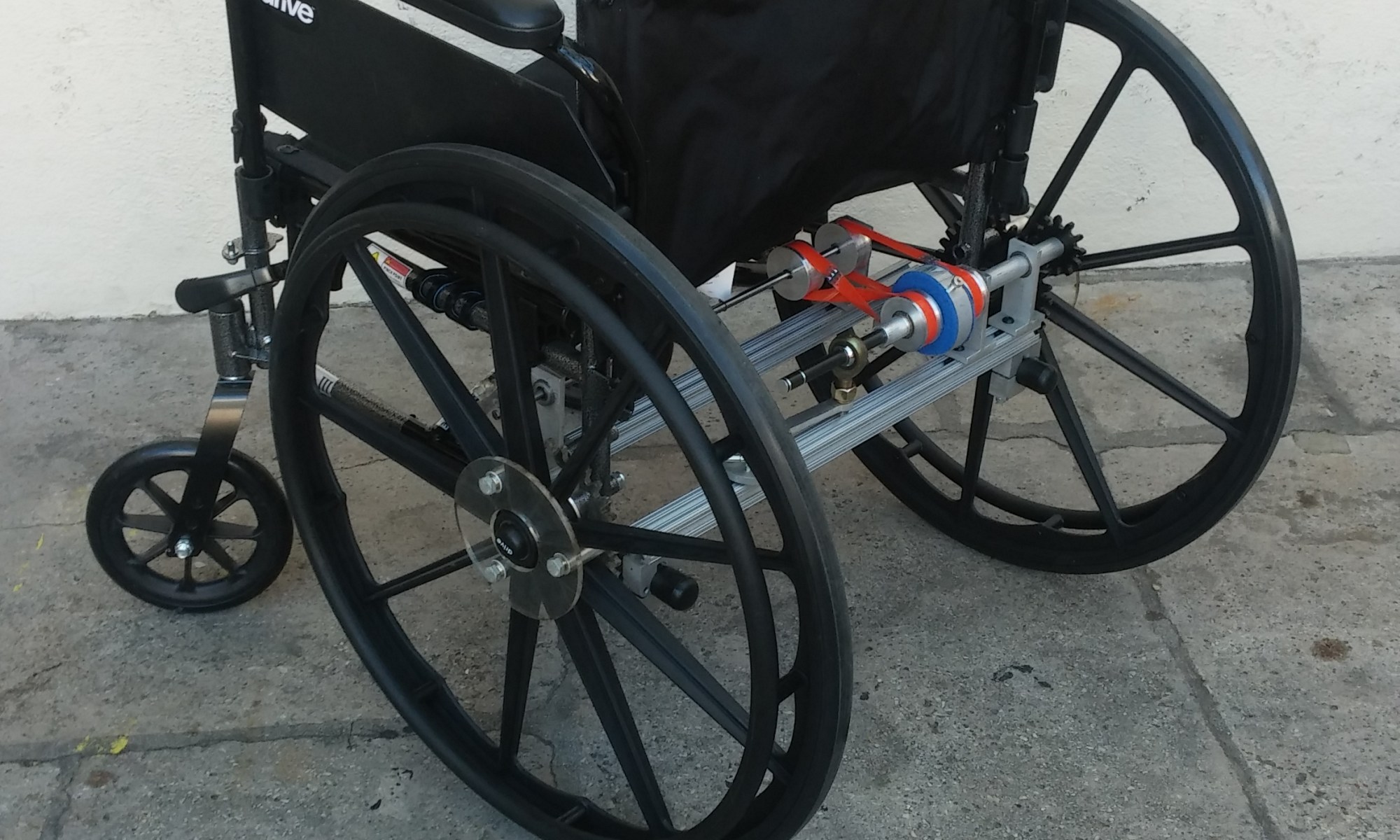
This project was conducted for Caltech’s course Design for Independence from Disability. My team designed and fabricated a prototype mechanism for converting a standard mechanical wheelchair into one operable by a person with hemiplegia. Hemiplegia, in which one half of the body is full or partially paralyzed, is common in stroke victims. While wheelchairs capable of one-arm operation exist, there are limited models and all are high cost. This device allows the user to select a (much less expensive) standard wheelchair of their preference, and convert it to a single-arm operable wheelchair -without permanent modification. Our designed device is able to bolt onto a wheelchair with no need for technical fabrication – only a hex wrench is required for installation.

Soccer Robots

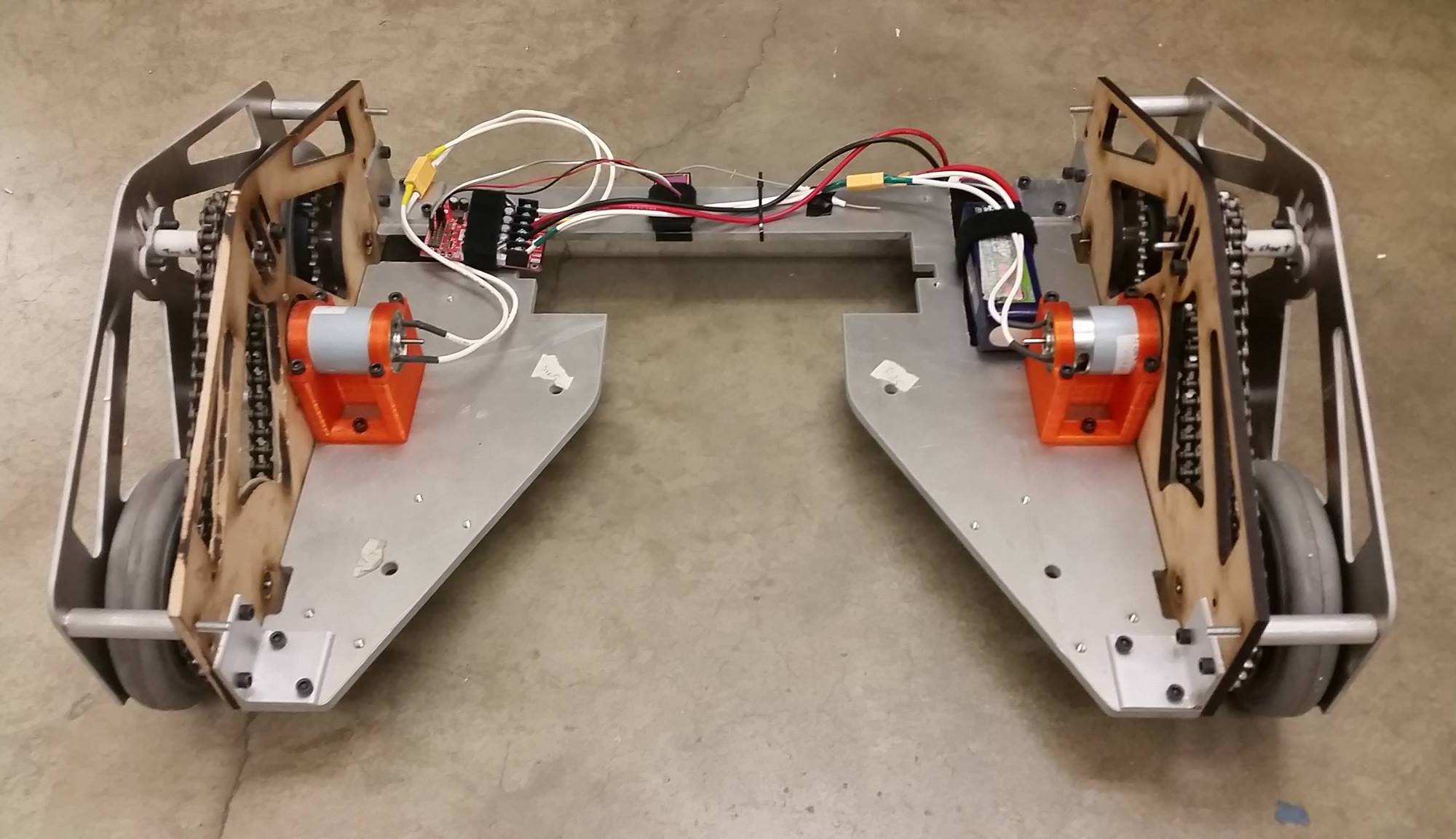
This was my senior design project at Caltech. Our team constructed 3 robots with a budget of just $1.5k for a “robot soccer” competition, in which teams had several minutes to score as many goals as possible. The game had 12 balls, three goals on each side, and obstacles in the center of the field. We used chain and sprocket drive train, fabricating all sprockets from stock with a waterjet. While we did not win the competition, our robots were so powerful that the instructor required we add bumpers, lest we damage the playing field.

Press related to this project:

ABC7 News Interview

Volcanobot

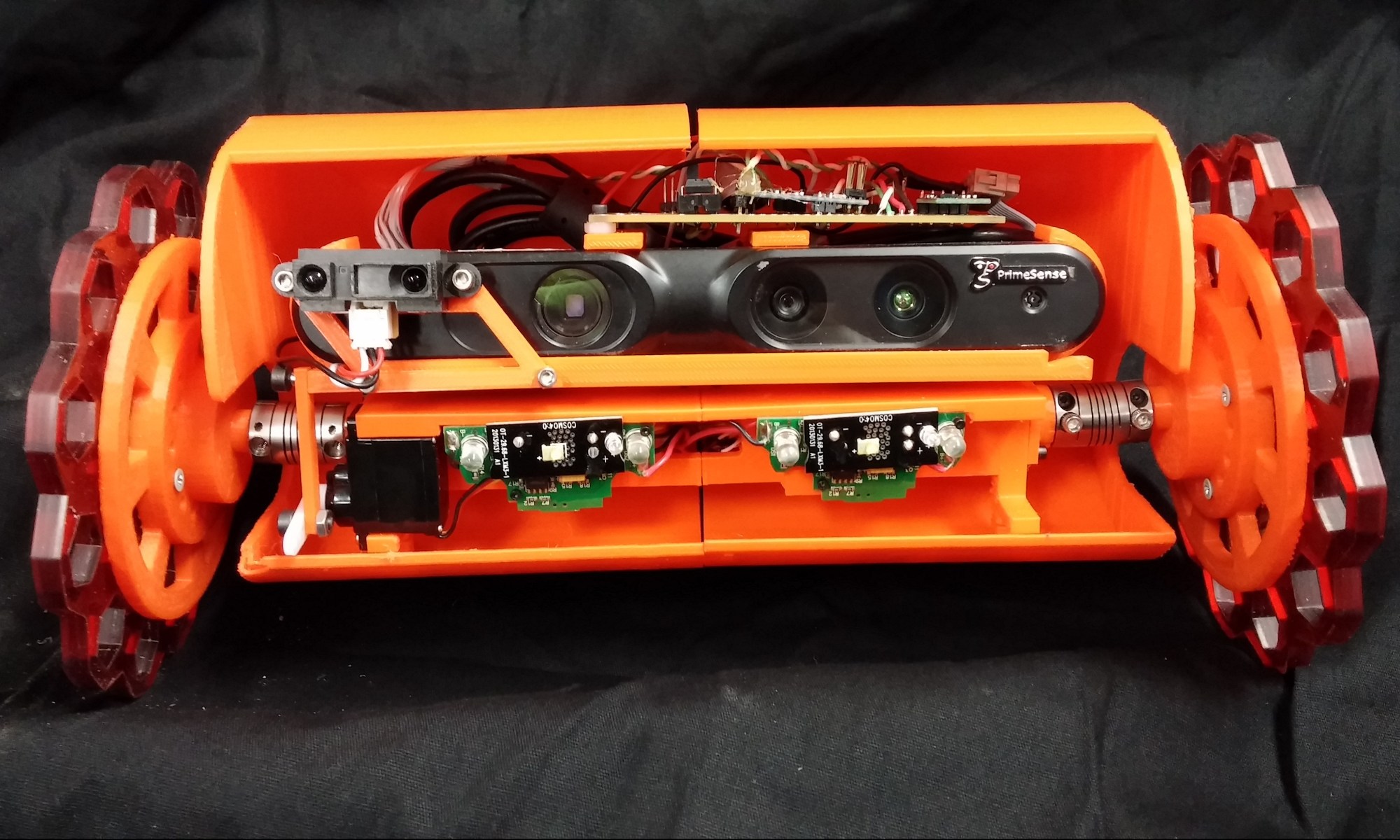
Volcanobot refers to a series of robots designed for 3D mapping of post-eruptive volcanic fissures, with the aim of analyzing their geometry to discover their formation mechanism.

In the summers of 2014 & 2015 I designed, fabricated, and tested generations 2 and 3 of Volcanobot. I also assisted in field testing during spring of 2015, where we deployed Volcanobot 2 at Mount Kilauea’s 1969 fissure system in Hawaii.

I performed all mechanical and electrical design and fabrication for the robots, which were designed to be highly mobile, compact, tethered platforms capable of steering themselves along a vertical wall. The robots used a short-range 3D depth sensor to record point cloud data of the fissure during descent and ascent.


Publications related to this project:

Carolyn E. Parcheta, Catherine A. Pavlov, Nicholas Wiltsie, Kalind C. Carpenter, Jeremy Nash, Aaron Parness, Karl L. Mitchell. A robotic approach to mapping post-eruptive volcanic fissure conduits. Journal of Volcanology and Geothermal Research,
Volume 320, 2016, Pages 19-28. Link.

Carolyn E. Parcheta, Jeremy Nash, Aaron Parness, Karl L. Mitchell, Catherine A Pavlov. Narrow Vertical Caves: Mapping Volcanic Fissure Geometries. 2nd International Planetary Caves Conference, held 20-23 October, 2015 in Flagstaff, Arizona. LPI Contribution No. 1883, p.9010. Link.

Press related to this project:

NASA JPL

Space.com

Popular Science